The science of sound healing
Sound healing uses the vibrations of instruments such as Tibetan singing bowls, bells, shells, drums and the voice to gently shift the body's internal state. When we listen — really listen — the brain begins to move from active beta waves toward the slower alpha and theta waves associated with deep relaxation, creativity and meditative rest.
Research on receptive sound experiences has shown reductions in reported anxiety, tension and physical pain, alongside improvements in mood and a sense of spiritual well-being. The mechanism is simple and ancient: rhythm and resonance entrain the nervous system, giving the body permission to let go of the guard it has been holding.
You don't need to believe anything for it to work. You simply lie down and let sound do what sound does — arrive, move through, and pass.
The vagus nerve — the body's brake pedal
The vagus nerve is the longest cranial nerve in the body. It wanders (its name means wanderer) from the brainstem down through the throat, heart, lungs and gut, carrying information in both directions between the brain and the organs.
It's the main pathway of the parasympathetic nervous system — the "rest and digest" state — and when it's well-toned, we recover from stress more quickly, sleep more deeply, digest more easily and feel more emotionally steady.
Slow exhalations, humming, chanting, gentle sound, and the resonant tones of singing bowls all stimulate the vagus nerve directly, because it runs through the muscles of the throat and the walls of the inner ear. That's why a sound bath or a slow breath practice can leave you feeling as though something in you has been quietly reset — because something has.
The benefits of a yoga practice
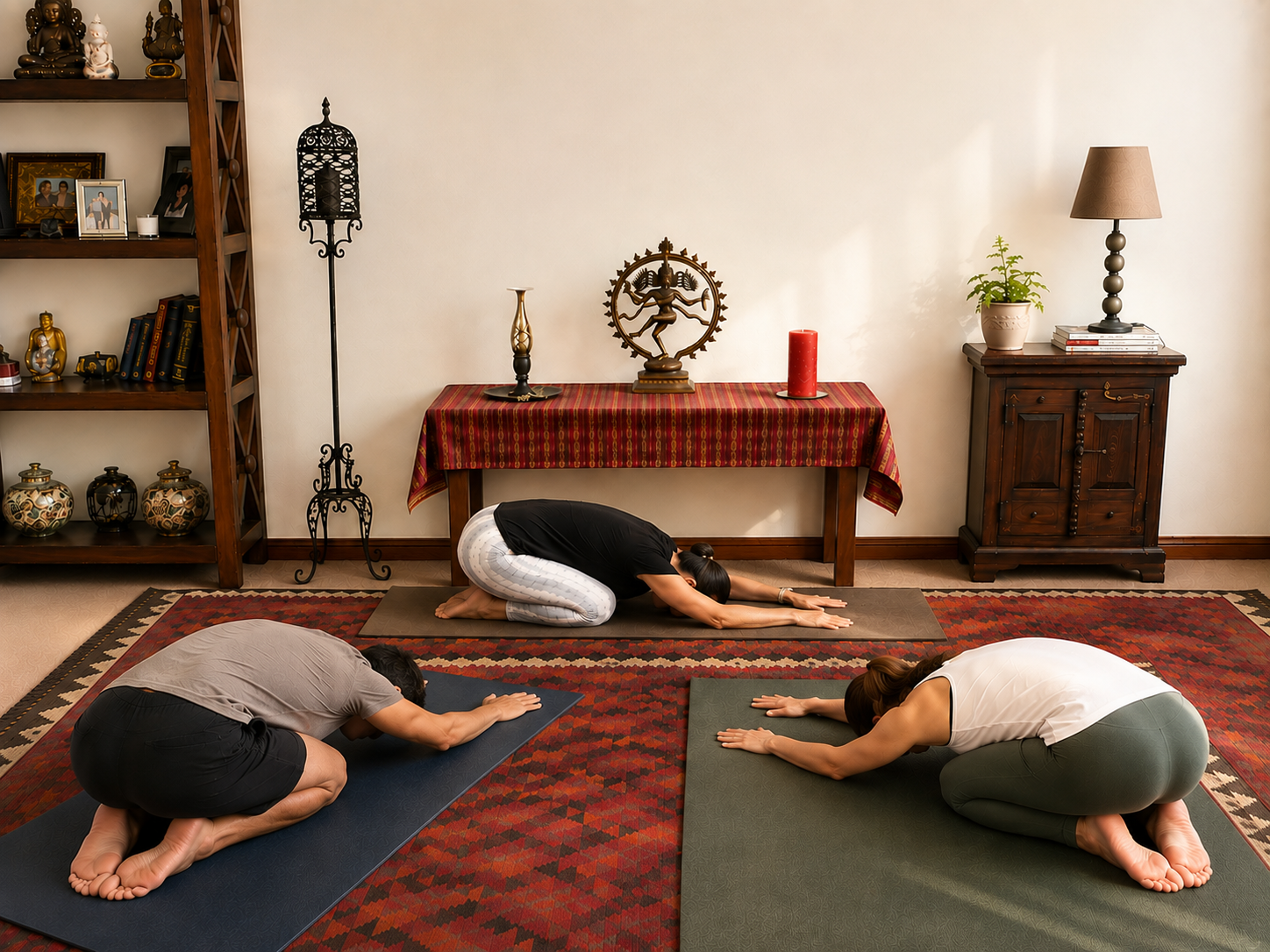
A regular yoga practice is a slow gift to the future body. Over time, it builds strength and mobility, releases the small tensions we carry without noticing, and teaches the nervous system a repeatable path back to calm.
Beyond the physical, yoga is a practice of attention — of returning, again and again, to the breath. That return is what changes us. It softens the reactivity of daily life, supports sleep, eases anxious thought patterns, and gently reconnects us to a body we may have been living apart from.
You do not need to be flexible, or fit, or calm, to begin. You only need to be willing to arrive on the mat as you are.
"Yoga is the journey of the self, through the self, to the self."
— The Bhagavad Gita